2026-09-02 · Scott Pendleton
What Happens in the First 48 Hours After a House Fire in Colorado Springs
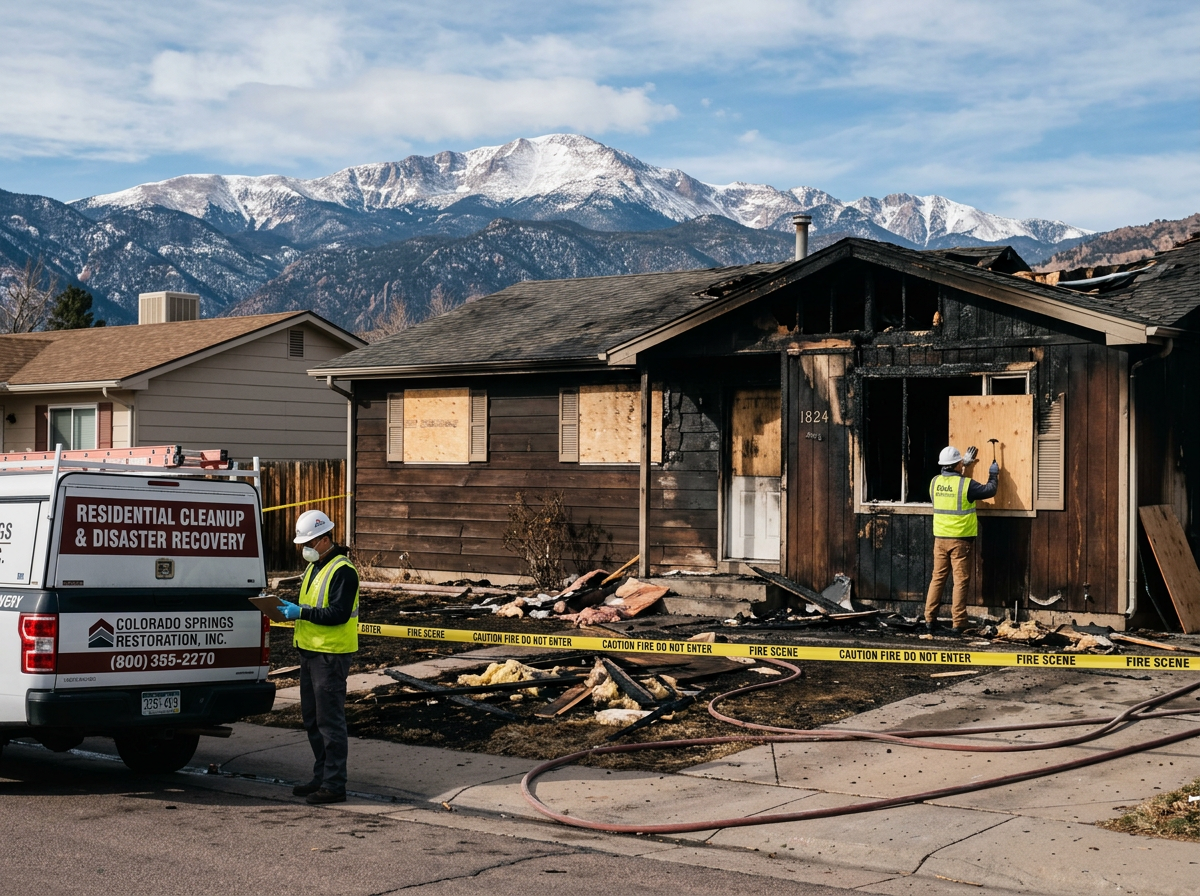
In the first 48 hours after a house fire in Colorado Springs, smoke particles travel through HVAC intakes and attic vents into walls and insulation even when the structure itself does not burn, while suppression water soaks floors and subfloors. Dry air at 6,035 feet keeps particulates suspended longer, driving residue deeper into carpet, drywall, and fabrics than at lower elevations.
Smoke Movement Through the Home
Smoke from a structure fire or nearby wildfire moves quickly through unsealed openings once the fire is out. In El Paso County the combination of dry conditions and elevation keeps fine particles airborne, allowing them to settle inside ductwork and behind baseboards within the first day. Homeowners often notice a persistent odor in closets and attics because porous materials absorb the residue before any cleaning begins. Checking HVAC filters and noting which rooms smell strongest gives a clear picture of how far the smoke traveled. This early observation helps when deciding whether to run the system or keep it off to avoid spreading particles further. The Waldo Canyon Fire in 2012 and Black Forest Fire in 2013 showed how smoke alone can affect homes miles from the burn area, leaving residue that requires targeted removal rather than simple airing out.
Water from Fire Suppression
Suppression water arrives with nearly every structure fire and begins affecting wood framing and flooring immediately. In Colorado Springs homes this water mixes with soot to create a sticky residue that can stain concrete and hardwood within 24 hours if left standing. Basements and crawl spaces collect the majority of runoff, raising humidity levels that encourage mold growth on drywall edges by the 48-hour mark. Turning off the main water supply when safe prevents additional leaks from damaged pipes. Placing fans in unaffected areas helps move air without stirring settled soot into new rooms. Documenting water depth in each space with photos supports later discussions with insurance adjusters about the extent of secondary damage.
HVAC and Attic Concerns
Attic vents and HVAC intakes pull smoke into the home even when flames never reach the living space. At Colorado Springs elevation, lower oxygen levels change how smoke cools and deposits, often leaving a thin film on coil surfaces inside the furnace. Running the system spreads this film through every register, so keeping the thermostat off during the first 48 hours limits distribution. Homeowners can remove and bag return-air filters to reduce further contamination. Checking the attic for ash on insulation shows whether smoke entered through roof vents during the fire. These steps keep the problem contained while waiting for professional assessment of the ductwork.
Insurance Documentation Steps
Colorado insurance claims for smoke and fire damage require clear records of what was affected in the first two days. Photographing every room, including inside closets and the attic, creates a baseline before any cleaning occurs. Noting the date and time of each photo helps establish the progression of water stains or odor intensity. Keeping receipts for any supplies purchased, such as plastic sheeting or fans, supports requests for reimbursement of temporary mitigation. Contacting the carrier within 24 hours starts the claim process and often leads to an adjuster visit before the 48-hour window closes. This sequence protects coverage for both the original fire damage and the water introduced during suppression.