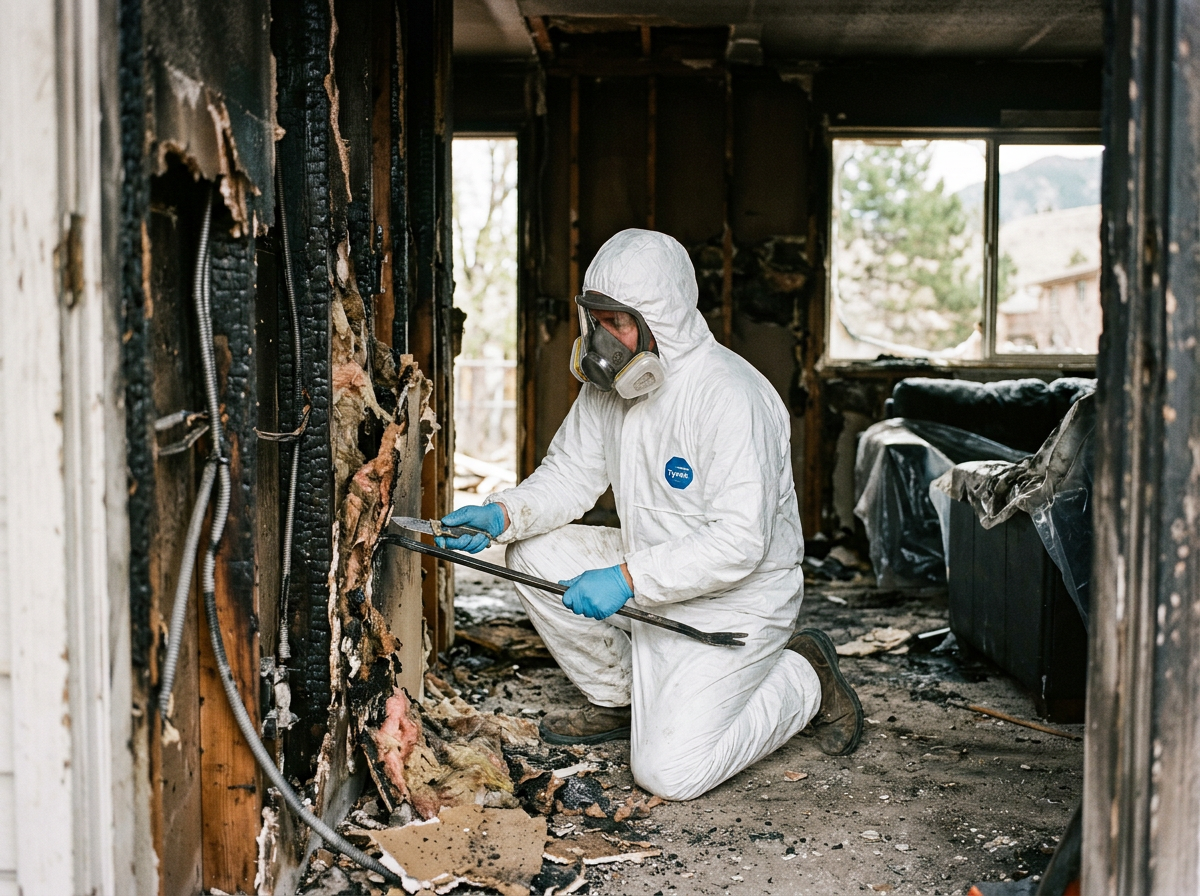
Every structure fire in Colorado Springs brings suppression water that must be removed before any soot work begins, because standing moisture drives corrosion into metals and sets stains into porous surfaces. Crews start by isolating affected zones, extracting water with truck-mounted equipment, and drying the structure to prevent secondary mold growth in the dry 6,035-foot climate. Skipping this step leaves hidden damp pockets behind walls that later release musty odors mixed with smoke residue.
Residue chemistry changes at altitude, so alkaline soot from typical household fires requires different neutralizers than the acidic deposits left by synthetic materials common in 1970s Security-Widefield tract homes. Technicians test pH on site and match agents accordingly: protein-based residues from kitchens respond to enzyme cleaners, while oil-based soot from garages needs solvent emulsions. Fine particulates stay airborne longer in the arid air and penetrate deeper into insulation, carpet pads, and unsealed drywall, often requiring full removal rather than surface cleaning.
Wildfire smoke enters through HVAC intakes, attic vents, and window seals even when the structure never burns, especially during chinook wind events that push plumes against lee-side homes in Briargate and Wolf Ranch. These jobs focus on negative-air filtration and HVAC decontamination because the ultra-fine particles embed in duct liners and fabric furnishings. Pre-war Old North End homes with original plaster and large-lot Black Forest properties present different challenges, as unsealed attics and crawlspaces become reservoirs for lingering odors.
Safety protocols include continuous air monitoring for carbon monoxide and VOCs before occupants return, plus disposal of porous items such as upholstered furniture, mattresses, and heavily contaminated insulation that cannot be restored. Attempting to save these materials leaves health risks from off-gassing particulates that the dry climate keeps suspended. Final clearance testing confirms airborne particle levels have returned to background before any reconstruction begins.
Technician insight
In Colorado Springs, the thing that catches most people out with Fire Damage Restoration is how fast wildfire smoke gets pulled into HVAC systems in newer Briargate homes during chinook winds; the dry air keeps those fine particles moving until we set up negative pressure, and once they reach the ducts they are far harder to remove than soot from a contained kitchen fire.
Wildfire Smoke Infiltration In A Briargate Residence
A homeowner returned from evacuation to find no burn damage but strong smoke odor throughout the house. Inspection showed particulates had entered through the HVAC intake and settled in ductwork and carpet during a chinook wind event. Crews performed water extraction on minor suppression areas, then decontaminated the full duct system and applied odor neutralization. The family moved back in after clearance testing showed particle levels at background.
Fire Damage Restoration Services We Offer
✓Suppression Water Extraction
Removes standing water and moisture from floors, walls, and cavities immediately after fire department operations to stop corrosion and mold in Colorado Springs structures.
✓Soot Removal and Cleaning
Applies pH-matched agents to hard surfaces and contents, removing alkaline or acidic residues without driving particles deeper into porous materials.
✓Wildfire Smoke Odor Elimination
Uses negative air machines, ozone or hydroxyl generators, and HVAC decontamination to clear smoke that entered through vents and seals during regional fires.
✓Contents Pack-Out and Restoration
Catalogs, cleans, and stores salvageable belongings off-site while on-site work proceeds, returning items only after odor and residue verification.
✓HVAC and Duct Decontamination
Cleans and treats ductwork and equipment that pulled fine wildfire particulates into homes, preventing re-circulation of contaminants after restoration.
Fire Damage Restoration Cost in Colorado Springs, CO
| Service | Typical Range | What Affects It |
|---|---|---|
| Initial Assessment And Water Extraction | $800–$2,500 | Depends on square footage and volume of suppression water present. |
| Soot Cleaning Per Room | $400–$1,200 | Varies with residue type and surface porosity. |
| HVAC Decontamination | $600–$1,800 | Higher for homes with duct liners or extensive wildfire smoke. |
| Contents Pack-Out And Cleaning | $1,000–$4,000 | Based on item count and required off-site processing time. |
Ranges are typical for Colorado Springs, CO and confirmed with an exact written quote before any work starts.
How it works
- 1
Emergency Response And Safety
Technicians arrive within hours, secure the site, test for structural hazards and airborne contaminants, and establish containment to protect unaffected areas.
- 2
Water Extraction And Drying
Standing suppression water is removed first, followed by industrial drying and moisture mapping to eliminate hidden dampness before residue cleaning starts.
- 3
Residue Identification And Cleaning
pH testing determines the correct agents for each soot type; surfaces are cleaned in sequence from least to most porous to avoid cross-contamination.
- 4
Odor Removal And Air Scrubbing
Specialized equipment neutralizes embedded smoke odors and captures remaining particulates, with particular attention to HVAC systems in wildfire exposure cases.
- 5
Final Clearance And Handover
Air quality testing and visual inspection confirm the property meets restoration standards before reconstruction or re-occupancy.
Pricing
Pricing varies by scope, affected materials, and whether wildfire smoke or structure fire is involved.