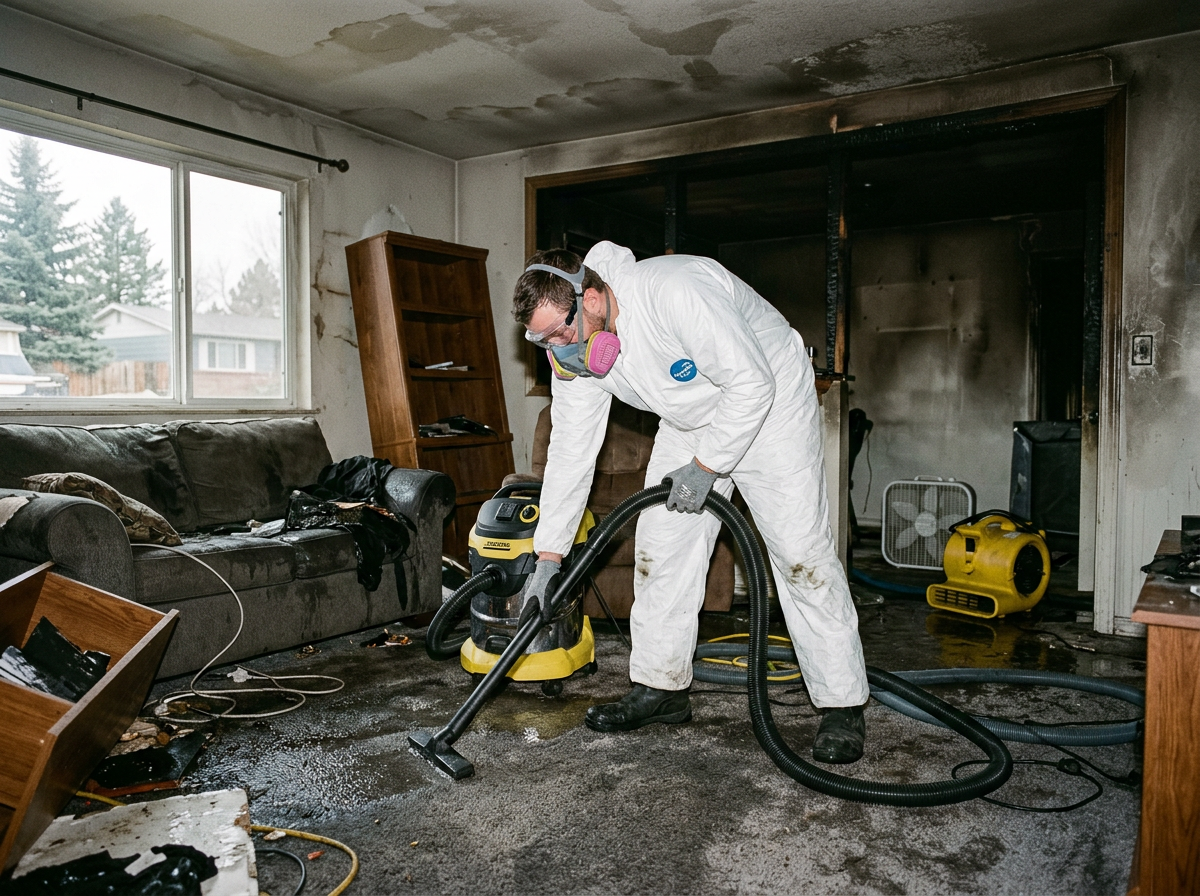
Every structure fire in El Paso County brings suppression water that must be removed before any soot work starts. Standing water mixes with combustion residues and drives them deeper into subfloors, drywall, and insulation. At 6,035 feet the lower oxygen level alters how soot bonds to wet surfaces, so crews begin with moisture mapping and targeted extraction rather than general drying. Porous materials like carpet pad and particleboard trap this contaminated water and usually cannot be saved once saturation exceeds 48 hours.
Dry Colorado Springs air keeps fine particulates airborne longer, but once they settle into wet cavities they require different chemistry than standard water jobs. Protein-based residues from kitchens need alkaline cleaners while synthetic smoke from plastics calls for solvent-based agents; using the wrong product sets the soot permanently. Chinook winds can push additional smoke through HVAC intakes while crews work, so negative-air machines and sealed containment stay in place until extraction finishes.
Safety starts with turning off electrical circuits in wet zones and monitoring for hidden hot spots left from the original fire. Homeowners often attempt their own drying with box fans, which simply circulates soot-laden moisture into wall cavities and attic spaces. Older Security-Widefield tract homes from the 1970s frequently have layered flooring that hides water under multiple underlayments, requiring sequential removal rather than surface drying alone.
Large-lot properties in Black Forest and Calhan often involve longer hose runs and limited access for equipment, increasing both time and cost. Once water is gone, remaining soot must be cleaned with HEPA filtration to prevent re-soiling during the drying phase. Materials that stay damp longer than 72 hours in this climate develop hidden mold colonies behind baseboards that only appear after the job is thought complete.
Technician insight
In Colorado Springs the thing that catches most people out with Water Damage Cleanup After Fire is how quickly suppression water in 1970s Security-Widefield homes wicks soot under layered vinyl and particleboard subfloors; once that happens you cannot dry the cavity without removing the flooring first.
Black Forest Home After Lightning Strike Response
Suppression water from a lightning-caused roof fire had pooled in the attic and leaked through ceilings into insulation. Crews found the water already carrying fine soot into wall cavities because of the dry air and wind. Extraction and targeted drying prevented mold while the soot was cleaned from wet surfaces before it set.
Water Damage Cleanup After Fire Services We Offer
✓Suppression Water Extraction
Removes standing and trapped fire-suppression water from floors, walls, and cavities before soot migrates deeper into materials.
✓Post-Fire Moisture Mapping
Uses meters and thermal imaging to locate hidden water in 1970s-80s tract homes and newer Briargate builds where drywall layers trap moisture.
✓Soot-Contaminated Water Removal
Extracts water mixed with combustion residues from subfloors and insulation that standard water damage crews cannot handle safely.
✓HVAC Water and Smoke Flush
Clears suppression water and smoke particles from ductwork that entered through attic vents and returns during chinook wind events.
✓Rapid Structural Drying
Deploys commercial air movers and dehumidifiers sized for high-altitude conditions to prevent secondary damage in porous materials.
✓Content Pack-Out and Cleaning
Removes and cleans salvageable items exposed to both water and soot before permanent staining occurs.
Water Damage Cleanup After Fire Cost in Colorado Springs, CO
| Service | Typical Range | What Affects It |
|---|---|---|
| Initial Assessment and Moisture Mapping | Free | Always provided before work begins. |
| Water Extraction (per 1,000 sq ft) | $800–$1,600 | Varies with depth of saturation and access. |
| Drying Equipment Rental (daily) | $150–$350 | Depends on number of rooms and altitude drying rates. |
| HVAC Flush After Fire Water | $600–$1,200 | Required when smoke entered through returns. |
| Content Pack-Out and Cleaning | $500–$2,000 | Based on volume and residue type. |
Ranges are typical for Colorado Springs, CO and confirmed with an exact written quote before any work starts.
How it works
- 1
Site Assessment and Safety Lockout
Technicians map moisture, identify electrical hazards, and establish containment to keep airborne soot from spreading while water remains.
- 2
Contaminated Water Extraction
Standing and trapped water is removed using pumps and wands, with special attention to layered flooring common in Security-Widefield homes.
- 3
Residue-Specific Cleaning
Appropriate alkaline or solvent agents are applied based on residue type before any drying begins.
- 4
Drying and Monitoring
Equipment runs until moisture readings return to normal; daily checks prevent hidden mold in dry Colorado air.
- 5
Final Clearance and Soot Prevention
HEPA air scrubbing and surface cleaning finish the job so remaining soot does not re-deposit during the drying cycle.
Pricing
Pricing depends on water volume, affected square footage, and whether soot has already migrated into wet materials.