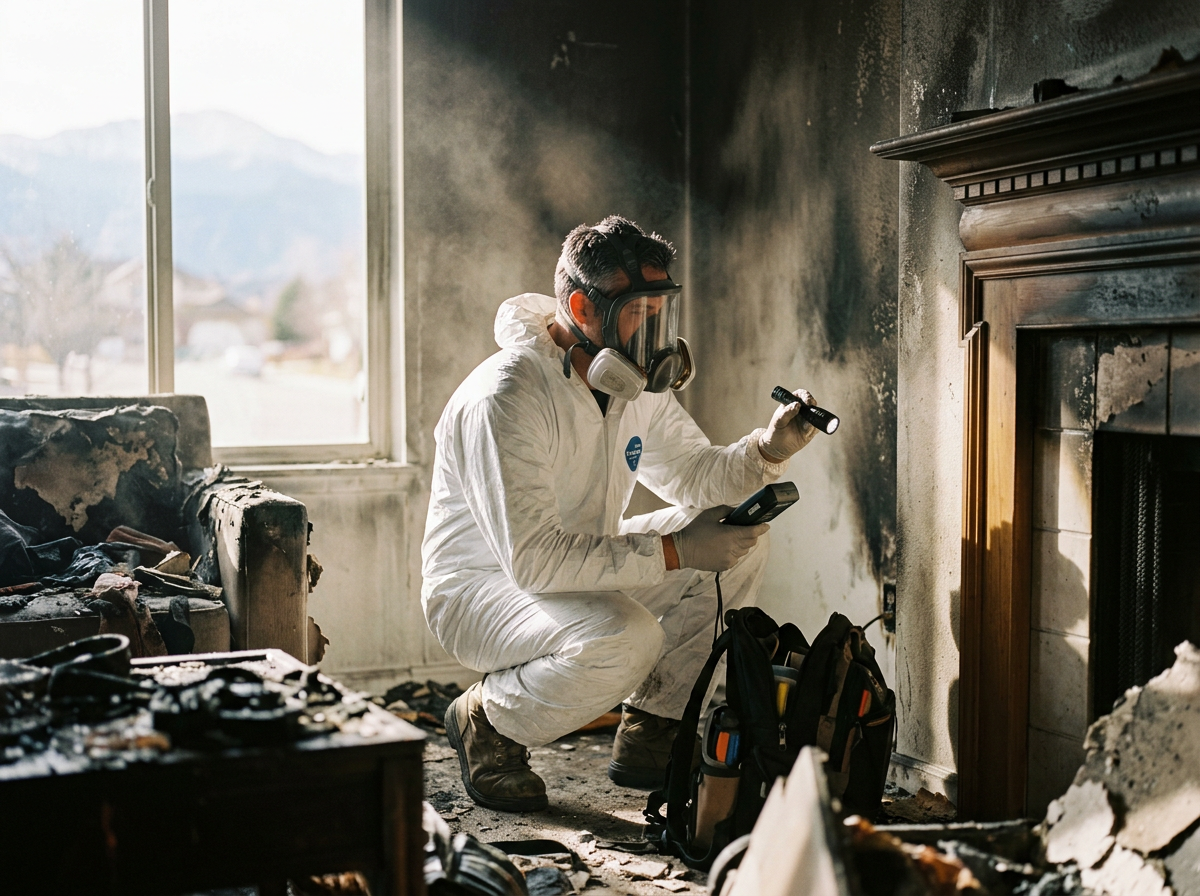
Manitou Springs sits in a narrow canyon below Pikes Peak where steep grades and tight lots slow equipment movement after a structure fire or wildfire. Older homes from the early 1900s often feature plaster walls, balloon framing and narrow hallways that let smoke travel between floors and into attics. Crews based in Colorado Springs must plan extra travel time along winding roads and stage smaller tools because larger trucks cannot always reach the property.
Water supply is another factor. Many properties rely on municipal lines that can be strained during an event, so restoration teams bring portable pumps and plan for limited hydrant access. High winds funneled through the canyon can push smoke deeper into homes and spread embers along the wildland-urban edge. Front Range Fire Damage responds around the clock, every day, to begin containment and odor removal before secondary damage sets in.
Restoration work here also accounts for drainage patterns along Ruxton Creek and Englemann Canyon. Soot and water can collect in low spots and basements faster than on flatter ground, requiring targeted extraction and drying to prevent mold in the dense historic stock.
Around Manitou Springs
We regularly work near:
- 📍Manitou Incline
- 📍Cave of the Winds
- 📍Miramont Castle
- 📍Englemann Canyon
- 📍Ruxton Avenue
- 📍Manitou Springs Historic District
Fire Damage Restoration in Manitou Springs — Local Notes
- •Narrow canyon roads force use of compact equipment and hand-carry methods for debris removal and air scrubber placement.
- •Early-1900s balloon-frame homes allow smoke to migrate vertically, requiring inspection of multiple floors and concealed spaces.
- •Limited on-site water during events means teams stage portable sources before starting soot removal and surface cleaning.
- •Steep lots and shared driveways restrict truck access, so crews coordinate staging areas with neighbors before heavy equipment arrives.