2026-09-02 · Scott Pendleton
Smoke Odor in Drywall and HVAC Ducts: What Actually Removes It
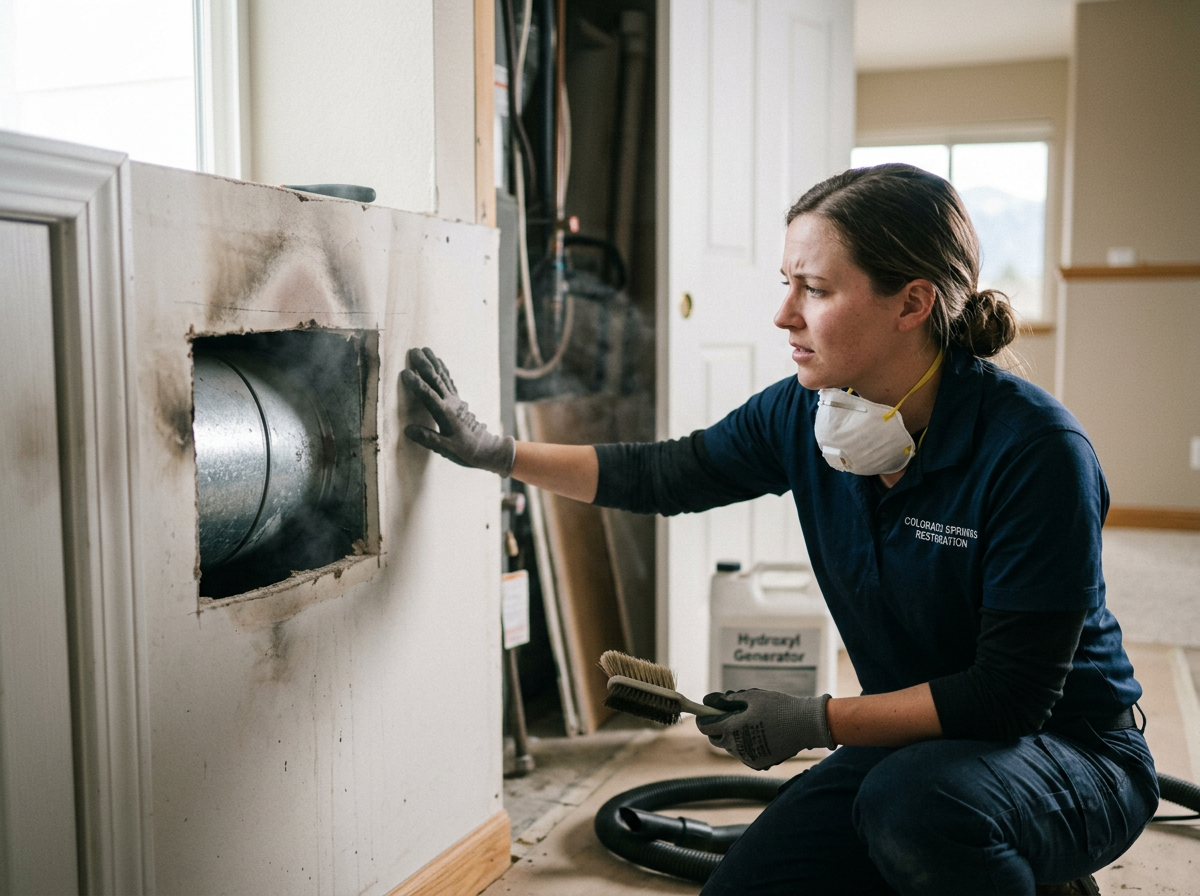
Smoke odor in drywall usually requires cutting out and replacing the affected sections because the porous gypsum absorbs particulates deeply, while HVAC ducts need disassembly, vacuuming, and filter replacement to clear residue that recirculates through the system. In Colorado Springs at 6,035 feet, dry air keeps fine smoke particles airborne longer, driving them into insulation and duct interiors during events like the 2012 Waldo Canyon Fire or the 2013 Black Forest Fire.
Assessing Penetration in Drywall
Homeowners first check for odor by smelling near baseboards and outlets where smoke travels through wall cavities. Visible staining on surfaces does not always indicate depth; testing involves removing a small outlet cover to inspect the paper facing and insulation behind it. In wildfire smoke cases across El Paso County, odor often concentrates in attics and exterior walls because HVAC intakes and attic vents pull particulates inward without any structure burning. A moisture meter can reveal whether suppression water from firefighters has also saturated the drywall, compounding the odor problem. Smoke damage restoration teams use this inspection data to map which walls must be opened rather than treated in place.
Removing or Sealing Affected Drywall
When smoke has reached the gypsum core, replacement is the reliable method because cleaning agents rarely reach embedded residue. Cut lines are made 12 to 18 inches above any visible line of staining, and all insulation within that cavity is discarded. New drywall is hung with gaps sealed using HVAC mastic to block future odor migration. In homes near Monument or Peyton where wildfire smoke infiltrated without flames reaching the structure, owners sometimes attempt ozone or hydroxyl treatments first, but these only mask odor that returns when humidity rises. Replacement avoids repeated treatments and restores the wall to a neutral state that passes inspection for insurance documentation.
Cleaning HVAC Ducts and Components
Ducts act as a distribution network for smoke particles that settle on interior surfaces and re-enter living spaces each time the system runs. Professional cleaning begins with negative-air machines that capture debris while technicians brush and vacuum branch lines and the main trunk. Registers and grilles are removed and washed separately, and the blower compartment is wiped to prevent residue from blowing back out. In Colorado Springs homes affected by the Black Forest Fire, filters often require replacement every 30 days for the first three months after smoke exposure because fine particulates continue to shed from duct walls. Odor removal specialists may apply a sealant coating inside accessible ducts only after mechanical cleaning is complete, never as a substitute.
Addressing Combined Water and Smoke Effects
Suppression water introduced during structure fires mixes with smoke residue to create a sticky film inside ducts and behind drywall. This film adheres to metal surfaces and porous materials, requiring both drying and cleaning steps. Technicians first extract standing water, then use air movers and dehumidifiers to bring moisture below 50 percent before odor work begins. The linked article Why Fire Suppression Water Causes More Damage Than the Flames explains how this sequence prevents secondary mold growth that can mask or worsen smoke smells. Skipping the drying phase leads to recurring odor complaints weeks later when temperatures fluctuate.
Insurance Documentation for Smoke Claims
Colorado insurance carriers typically cover smoke odor remediation when the fire event is documented, including cases of external wildfire smoke entering through HVAC intakes. Policyholders should photograph every opened wall and duct section before repairs and keep receipts for filter changes and cleaning. The article Does Homeowners Insurance Cover Smoke Damage in Colorado? outlines the specific language used in El Paso County policies for non-structure-burn claims. Clear records help avoid disputes over whether odor removal qualifies as necessary restoration versus cosmetic improvement.
Practical Takeaway
Focus first on identifying which drywall sections and duct runs actually contain residue rather than treating the entire home. Replacement of contaminated drywall combined with mechanical duct cleaning removes the source instead of masking it, and this approach holds up under the dry, high-altitude conditions common in the Front Range.